
Your neighbour’s son “does digital marketing.” That Instagram ad you just skipped? Digital marketing. The reason your favourite local restaurant shows up on Google Maps? Also digital marketing.
But if someone sat you down right now and asked you to explain what digital marketing actually is — in plain, simple words — would you be able to do it?
If the answer is “not really,” you’re in the right place. And honestly, you’re not alone. Most people use the term without fully understanding what’s under the hood.
By the end of this article, you’ll understand exactly what digital marketing is, why it matters, what the main types are, and — most importantly — what it means for you, whether you’re a student in Kerala exploring a career, a parent trying to understand what your child wants to study, or a small business owner wondering why your competitor is suddenly everywhere online.
Let’s get into it.
First, Let’s Talk About Why This Even Matters Right Now
Here’s a number that should make you stop scrolling: there are over 5.4 billion internet users in the world as of 2026. In India alone, we crossed 900 million internet users. And in Kerala — one of the most digitally literate states in the country — that number is climbing faster than almost anywhere else.
Every single one of those people is online every day. Searching, scrolling, shopping, watching, reading.
And businesses — big and small — are competing for their attention in that space.
That competition? That’s digital marketing.
If your business, your brand, or even your personal profile isn’t showing up where people are spending their time, you’re essentially invisible. And in 2026, invisible means irrelevant.
So, What is Digital Marketing? (The Simple Definition)
Digital marketing is the practice of promoting products, services, or brands through digital channels — like search engines, social media, email, and websites — to reach and connect with your target audience online.
That’s it. No mystery.
The word digital just means it happens on screens and the internet, not on billboards or in newspapers. The word marketing means you’re trying to reach the right people with the right message and get them to take an action — visit your shop, sign up, buy something, or just remember your name.
Think of it this way. Imagine you run a home bakery in Thrissur. Twenty years ago, you’d put up a flex banner on the road and maybe run an ad in Mathrubhumi. Today, you can put up a Reel on Instagram, run a WhatsApp campaign, and appear on Google when someone nearby searches “cake shop near me” — all in the same morning.
That’s digital marketing in real life.
The 7 Main Types of Digital Marketing (Explained Simply)
Digital marketing isn’t one thing. It’s an umbrella term that covers several different strategies. Here are the main ones you need to know:
1. Search Engine Optimization (SEO)
SEO is the process of making your website appear higher on Google search results — without paying for ads. When you search “best electrician in Thrissur” and a local business shows up at the top, that’s probably because they’ve done good SEO work.
2. Social Media Marketing (SMM)
This covers everything you do on platforms like Instagram, Facebook, YouTube, and LinkedIn to build your audience, engage with customers, and promote your brand. This includes both organic posts and paid promotions.
3. Content Marketing
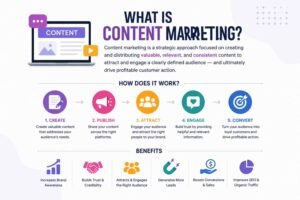
This is creating valuable content — blog posts, videos, guides, infographics — that helps your audience and builds trust in your brand over time. The article you’re reading right now is content marketing in action.
4. Pay-Per-Click Advertising (PPC / Google Ads)
This is paid advertising on Google, YouTube, or social media platforms. You pay each time someone clicks your ad. Done right, it drives fast, targeted traffic to your business.
5. Email Marketing
One of the oldest and still one of the most effective digital marketing tools. Sending newsletters, offers, and updates directly to people who have opted in to hear from you. The ROI on email marketing consistently beats almost every other channel.
6. Affiliate Marketing
This is when you promote someone else’s product and earn a commission for every sale made through your referral. Big in the YouTube and blogging space — many Kerala-based content creators use this to earn income.
7. AI Marketing & Automation
This is the newest and fastest-growing category. Using tools like ChatGPT, Google Gemini, and various AI platforms to automate content creation, customer service, ad targeting, and personalization. In 2026, this is no longer optional — it’s how smart marketers work faster and smarter.
Digital Marketing vs Traditional Marketing: What’s the Real Difference?
People often ask this, especially parents and business owners who are more familiar with the old way of doing things.
Here’s a simple comparison:
| Factor | Traditional Marketing | Digital Marketing |
|---|---|---|
| Where it happens | Print, TV, radio, hoardings | Internet, mobile, social media |
| Cost | High (lakhs for a TV ad) | Flexible (can start with ₹500) |
| Targeting | Broad (everyone who reads the paper) | Precise (only 25-35yr olds in Thrissur) |
| Measurability | Difficult to track | Every click, view, and sale is tracked |
| Reach | Local or regional | Local to global |
| Speed | Weeks to months | Hours to days |
| Interaction | One-way | Two-way (comments, shares, DMs) |
Neither is completely dead. But the shift is undeniable. Even traditionally-minded businesses in Kerala — jewellers, hospitals, educational institutions — are now investing heavily in digital marketing because that’s where decisions are being made.
Why Digital Marketing Matters Specifically for People in Kerala
Here’s something worth saying out loud: Kerala has one of the highest literacy rates and smartphone penetration rates in India. People here research before they buy. They Google local businesses. They check Instagram before they walk into a restaurant. They watch YouTube reviews before purchasing anything significant.
That means if you’re a business owner in Kerala, your customers are already online. The question is whether you are.
And if you’re a student or young person in Kerala thinking about your future — digital marketing is one of the most in-demand skills in 2026, both for employment and for freelancing. You don’t need a degree. You need the right knowledge and a willingness to learn by doing.
The demand for skilled digital marketers from Kerala is growing — not just locally, but from companies across India and even internationally. Freelancers here are earning between ₹20,000 to ₹1.5 lakhs per month depending on their skill set and client base.
What Does a Digital Marketer Actually Do Day to Day?
Let’s make this concrete. A digital marketer’s typical day might include:
- Morning: Checking website analytics — how many people visited, where they came from, what they clicked
- Mid-morning: Writing or reviewing content — a blog post, social media captions, or ad copy
- Afternoon: Managing ad campaigns — adjusting budgets, testing different versions of an ad
- Later: Responding to audience comments, analysing what’s working, planning next week’s content
- Ongoing: Researching trends, keeping up with Google algorithm changes, exploring new AI tools
Some digital marketers specialise in one area — like being an SEO specialist or a social media manager. Others, like the team at DigitalFathima.com, offer a full-service approach covering everything from SEO to AI marketing strategy.
How to Get Started with Digital Marketing (Your First 3 Steps)
You don’t need to know everything before you start. Here’s a simple entry path:
Step 1: Pick one area to learn first. Don’t try to learn SEO, social media, ads, email, and AI all at once. Pick one. For most beginners, social media marketing or SEO is the best starting point.
Step 2: Practice on something real. Start a blog. Create an Instagram page for a topic you care about. Build a simple website. Learning by doing accelerates your growth dramatically faster than just watching courses.
Step 3: Follow people who are actually doing it. Not just international gurus — follow practitioners from Kerala and India who understand your market. Read blogs, watch videos, and pay attention to what works in our local context.
If you want guidance built specifically for the Kerala audience — whether you’re a student, business owner, or just curious — DigitalFathima.com publishes practical, jargon-free guides designed exactly for you.
Key Takeaways
- Digital marketing is the promotion of businesses, brands, or individuals through online channels
- It includes SEO, social media, content marketing, paid ads, email, and AI marketing
- Unlike traditional marketing, digital marketing is measurable, targeted, and accessible at any budget
- Kerala’s digitally active population makes it one of the best places to either do digital marketing or use it for your business
- You don’t need a degree to get started — but you do need a strategy
Frequently Asked Questions
Is digital marketing hard to learn? Not if you approach it the right way. Start with one channel, learn the basics, and practice on real projects. Most people see progress within 2–3 months of consistent effort.
Can I learn digital marketing for free? Yes. Google Digital Garage, Meta Blueprint, HubSpot Academy, and YouTube all offer free, high-quality content. Paid courses accelerate learning but aren’t required to start.
How much can a digital marketer earn in Kerala? Entry-level roles start around ₹15,000–₹25,000/month. Experienced professionals and freelancers earn ₹50,000–₹1.5 lakhs or more depending on skills and clients.
Do I need a website to do digital marketing? Not to start. You can begin with social media and Google Business Profile. But eventually, a website becomes your most valuable digital asset.
What’s the difference between digital marketing and social media marketing? Social media marketing is one part of digital marketing. Digital marketing is the broader field that includes SEO, ads, email, content, and much more.
Ready to go deeper? Explore the full beginner’s guide to digital marketing services at DigitalFathima.com — built for Kerala businesses, students, and anyone who wants to understand the digital world without the jargon.